
Combi boiler replacement
Combi Boiler Replacement Milton Keynes
Get practical advice on replacing your current combi. Get a Free Estimate
Combi boiler replacement
Get practical advice on replacing your current combi. Get a Free Estimate
Combi boilers are common in many Milton Keynes homes because they provide heating and hot water without a separate hot-water cylinder. If an existing combi has become unreliable, replacing it with another combi can often be a straightforward option, particularly when the boiler position and existing system remain suitable.
Even with a like-for-like replacement, it is worth checking whether the new boiler is properly matched to the household. Hot-water performance, property size, number of bathrooms, incoming water conditions and existing pipework can all influence the choice. We look at those points before discussing replacement options rather than assuming the specification of the old boiler should simply be copied.
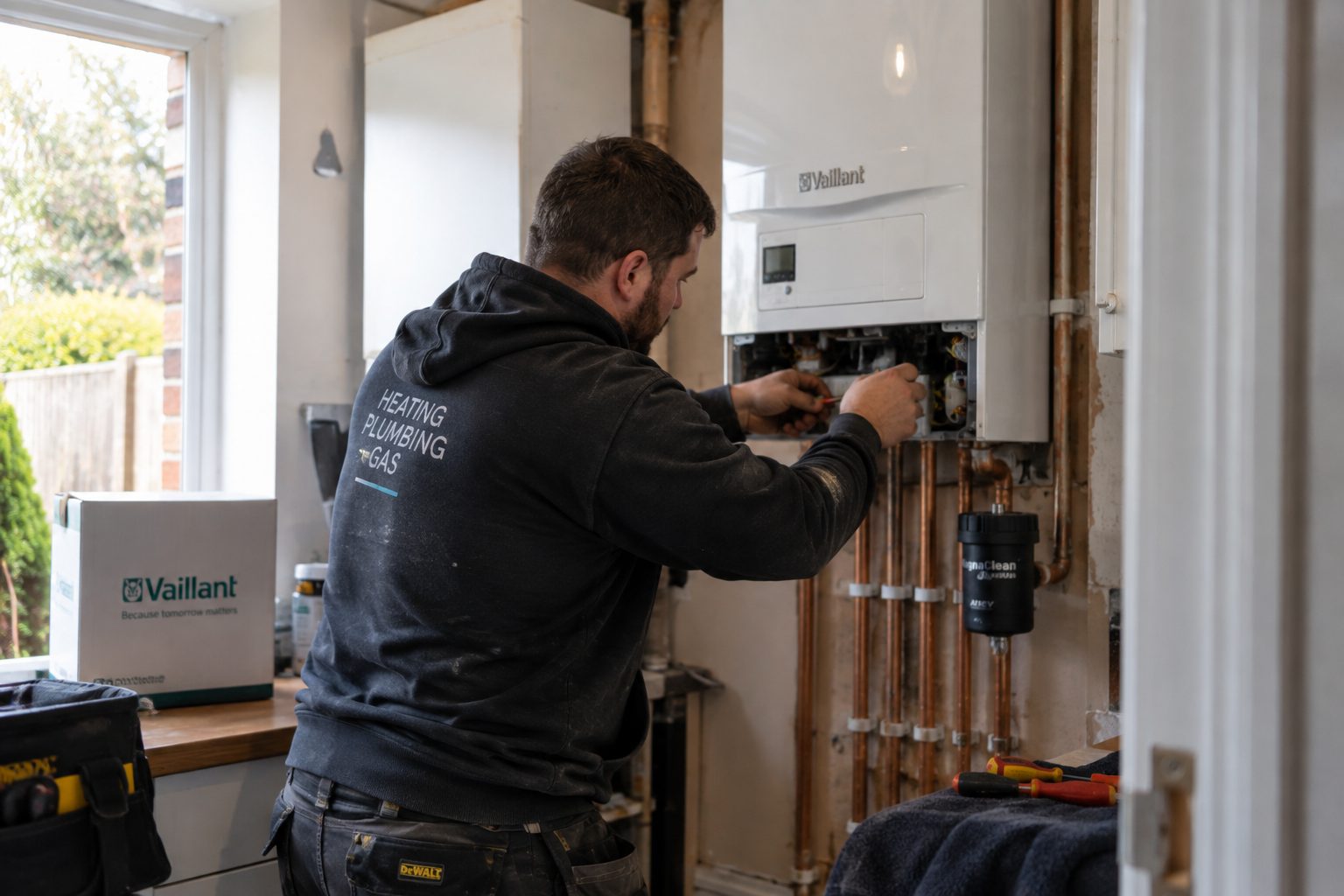
A combi replacement may be relatively simple, but several practical details can make a noticeable difference to how well the new system works for the household.
The number of people and bathrooms in the home matters because a combi produces hot water directly rather than drawing from a stored cylinder.
Choosing output is not just about heating the radiators. With a combi, the required hot-water performance is also an important part of the decision.
Replacing the boiler in the same position can simplify installation where the location, flue and surrounding connections remain suitable.
A move to a utility room, cupboard or other position may be possible, although it generally requires additional pipework and careful planning.
A replacement gives you an opportunity to review how heating is scheduled and controlled so the new boiler is easier to use day to day.
| Service | Estimated Cost | Average |
|---|---|---|
| Like-for-like combi replacement | About £2,000-£3,300 | Around £2,650 |
| Combi replacement with controls or minor changes | About £2,500-£4,000 | Around £3,250 |
| Combi replacement with relocation | About £3,200-£5,500+ | Around £4,350 |
These are general planning figures. Boiler specification, positioning, flue requirements, pipework and other changes can move the actual price above or below these ranges.
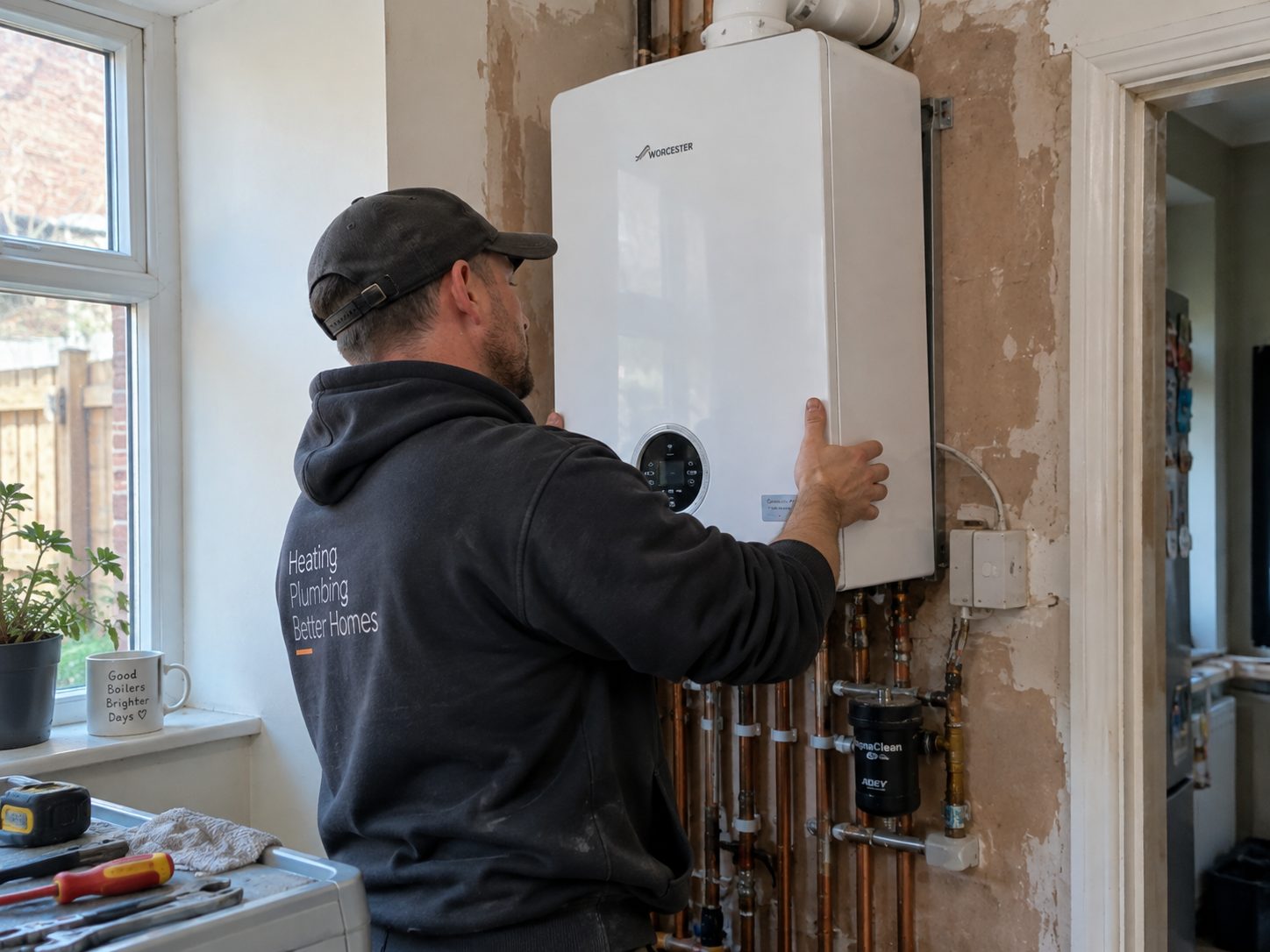
We consider the way the household uses hot water before discussing suitable combi options.
A larger boiler is not automatically the best answer, so the home's actual requirements guide the discussion.
We look at whether retaining or changing the boiler position makes practical sense.
We keep technical explanations clear so you understand what is changing and why.
If your current combi is unreliable or no longer meeting your needs, tell us what is happening and we can discuss the replacement options.
Free — no obligations
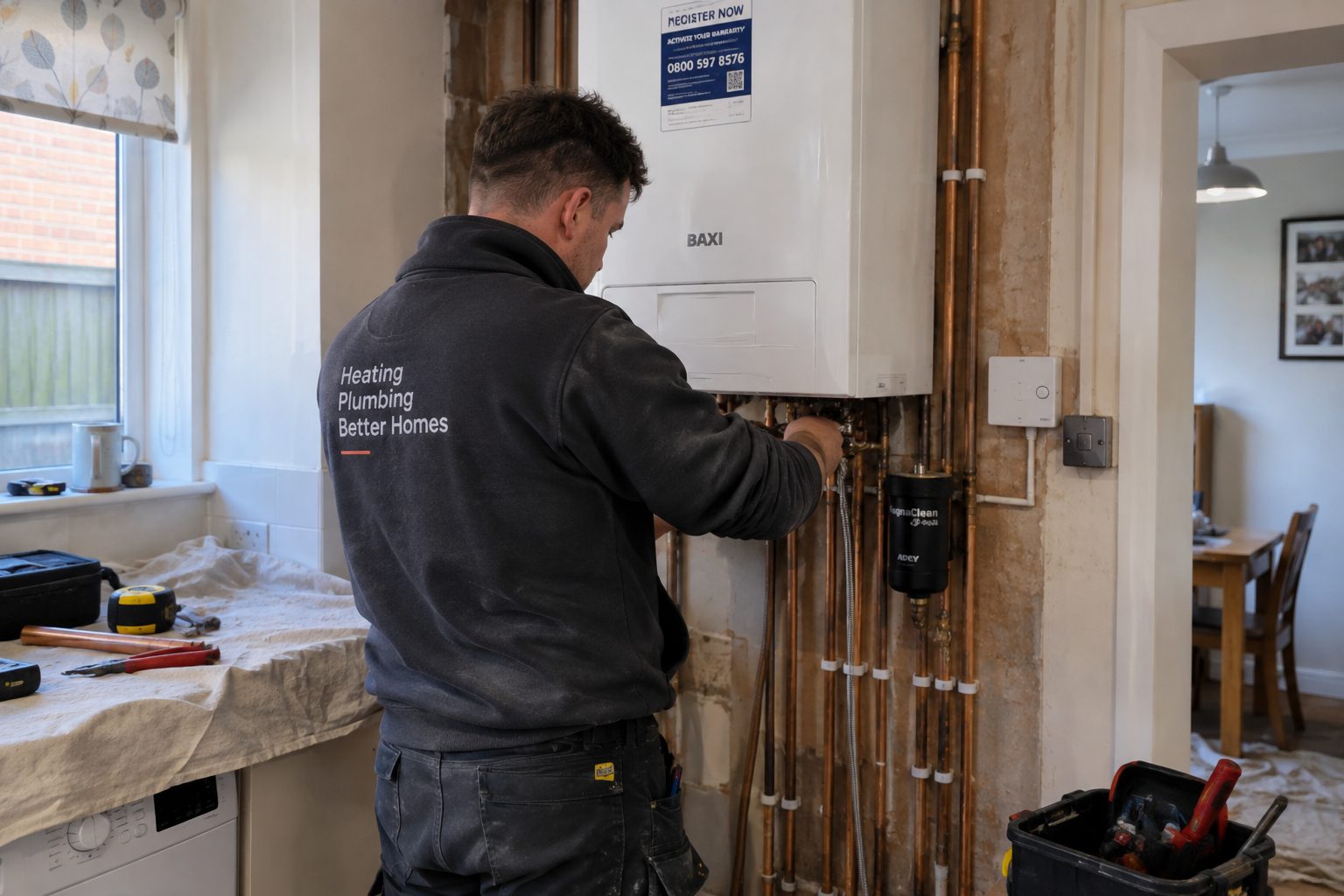
We look at its location, performance, approximate age and the reason you are considering replacement.
Property size, bathrooms and normal hot-water use help shape the specification.
Controls, pipework, flue arrangements and any planned relocation are considered.
The old appliance is removed and the new combi installed as planned.
The heating controls and everyday operation are explained after the installation.